CMS Series: Act.1 | "The Promising Overture"
Streamlining RKMM through the foundation (admin console & function management)
Role
Senior Product Designer
Timeline
H1 2023
Scope
Content Management System
Skills
UX/UI, Research, Facilitation
"What is the expectation of a newly hired designer to work on teaching products with complex business processes? Make the function ideal they said but being overwhelmed is not quite ideal for myself to start with!"
🔍 The Backdrop
In Q4 2022, my first time working in Govtech as the designer, I was only exposed to the end product in Platform Merdeka Mengajar (moving forward let's call it PMM) and one of its feature is Perangkat Ajar (toolkit/ teaching resources that contain modules and materials).
Little did I know in early 2023, the bulk business process was operating behind in Ruang Kolaborasi Merdeka Mengajar (let's call it RKMM). As the product designer, I need to collaborate cross-function and make sure all of the design decisions would solve the inefficient content management that kept arising.
🚩 What are the main challenges?
1. Product ownership of user management functions in RKMM is fragmented, with overlapping responsibilities across multiple squads.
RKMM is a large and complex system that not only manages contributions but also handles all user and information management for PMM, the user-facing platform. All user data from PMM is mixed within this system, meaning that fixing it requires cross-collaboration and alignment to ensure equal prioritization.
2. The business process for toolkit contributions is constantly evolving, requiring a modular approach to both thinking and problem-solving.
To ensure its irreversibility, we need to envision how in the future the product and its contribution process would be runned independently by external stakeholders. Therefore, eliminating manual processes and streamlining capabilities became our top priority.
Personal objective:
Understanding more about our digital education ecosystem for teachers while not getting lost at the substances and business process. When I joined Govtech edu in Q3 2022, my core concentration was only on the surface (see PMM Contextualization Project).
🪩 What's potentially fun?
However in our approaches, we had flexibility of discussion and internal testing as our own content team was the main users of the platform at least in the current business process.
All the team involved was very accommodating and transparent. It changed my mindset from being too cautious to efficiently communicate things I need to know to complete my tasks.
🧠 My Approach
1. We employed a shadowing method with the content team to gain a deeper understanding of all the touchpoints in their business process.
"What is the best way possible to understand each other (and the product…)? Tak kenal maka tak sayang, tak tahu maka sesat di jalan~"
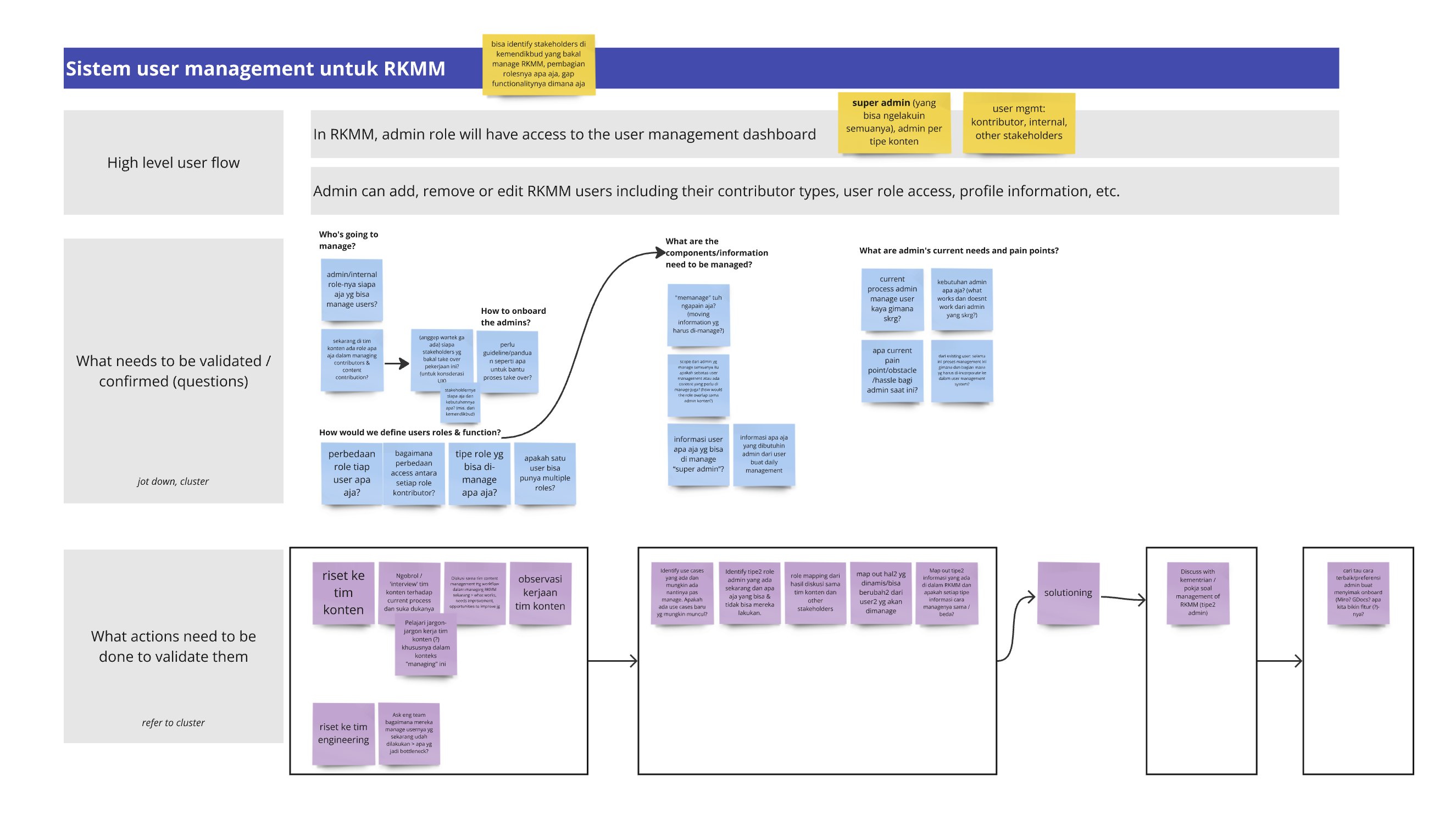
With content teams busily brainstorming about everything in their strategic mind, I was shadowing them with all design and product colleagues to understand the entire working process. This method was perfect because we were able to gain a holistic look at their day-to-day life (eavesdrop on all their calls) and jot down notes on pain points and frictions.
2. Being the bridge between business process and action plan with thorough design evaluation
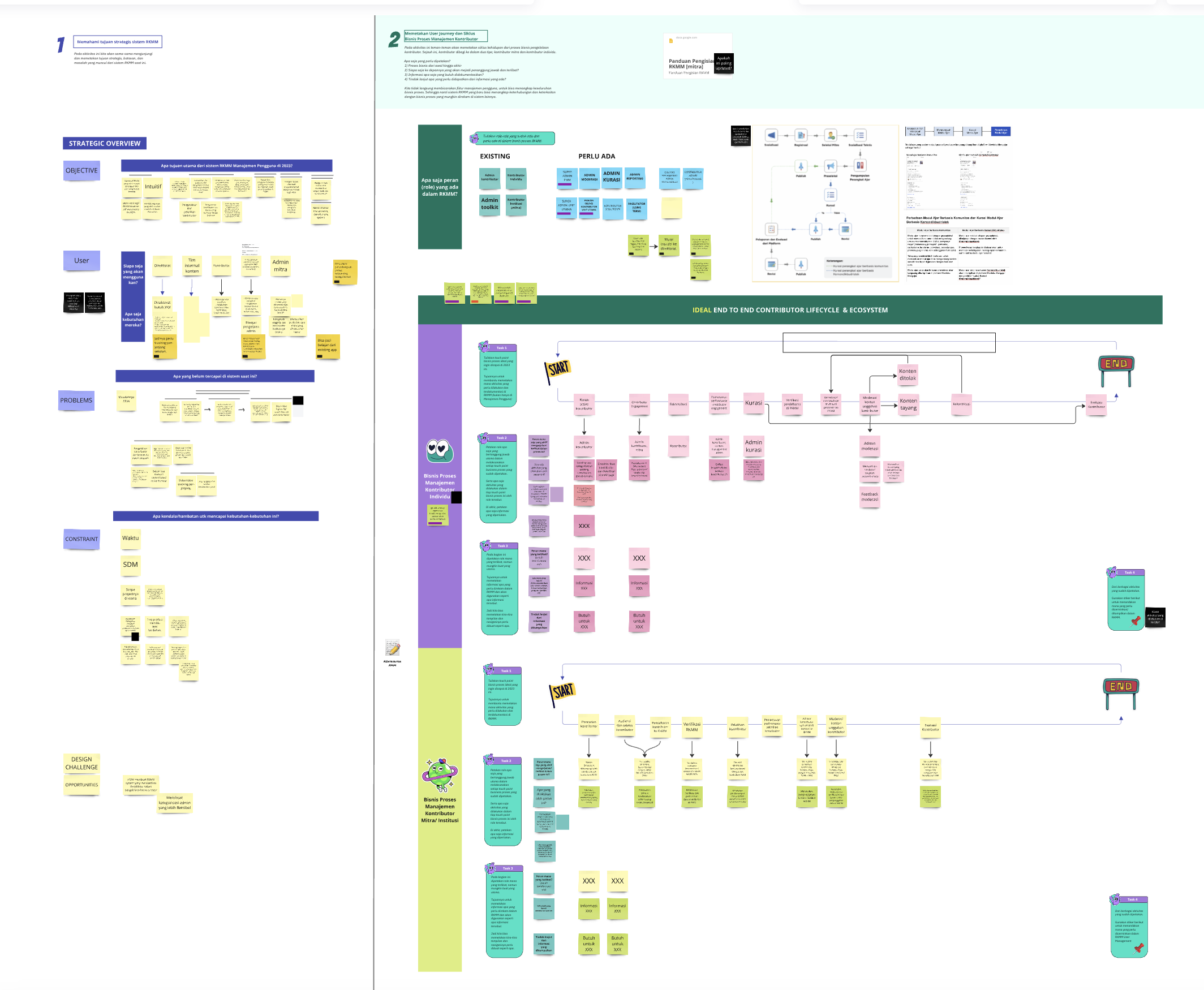
Conversely, I facilitated a small discussion to ensure the content team was involved in every step of the process leading up to delivery. After examining the ideal business processes for various contribution types, I evaluated and documented all functions within RKMM to prompt discussions on necessary improvements from the content team.
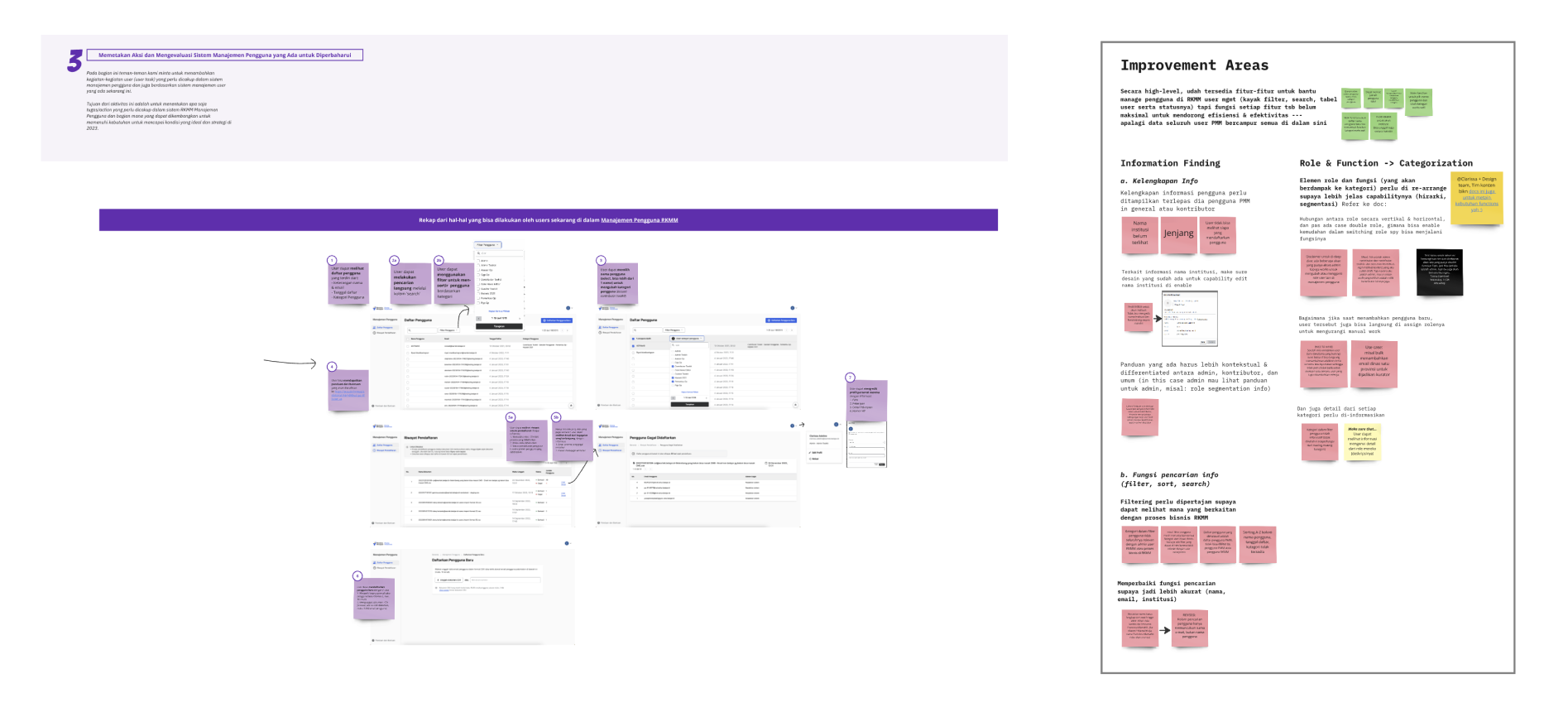
3. Provide structure and reorganize all roles, functions, and their interdependencies
After identifying the roles and functions that needed improvement, I organized all the information into interconnected pieces. A key insight I discovered early on was that the functions followed a hierarchical structure, leading to dependencies between them.
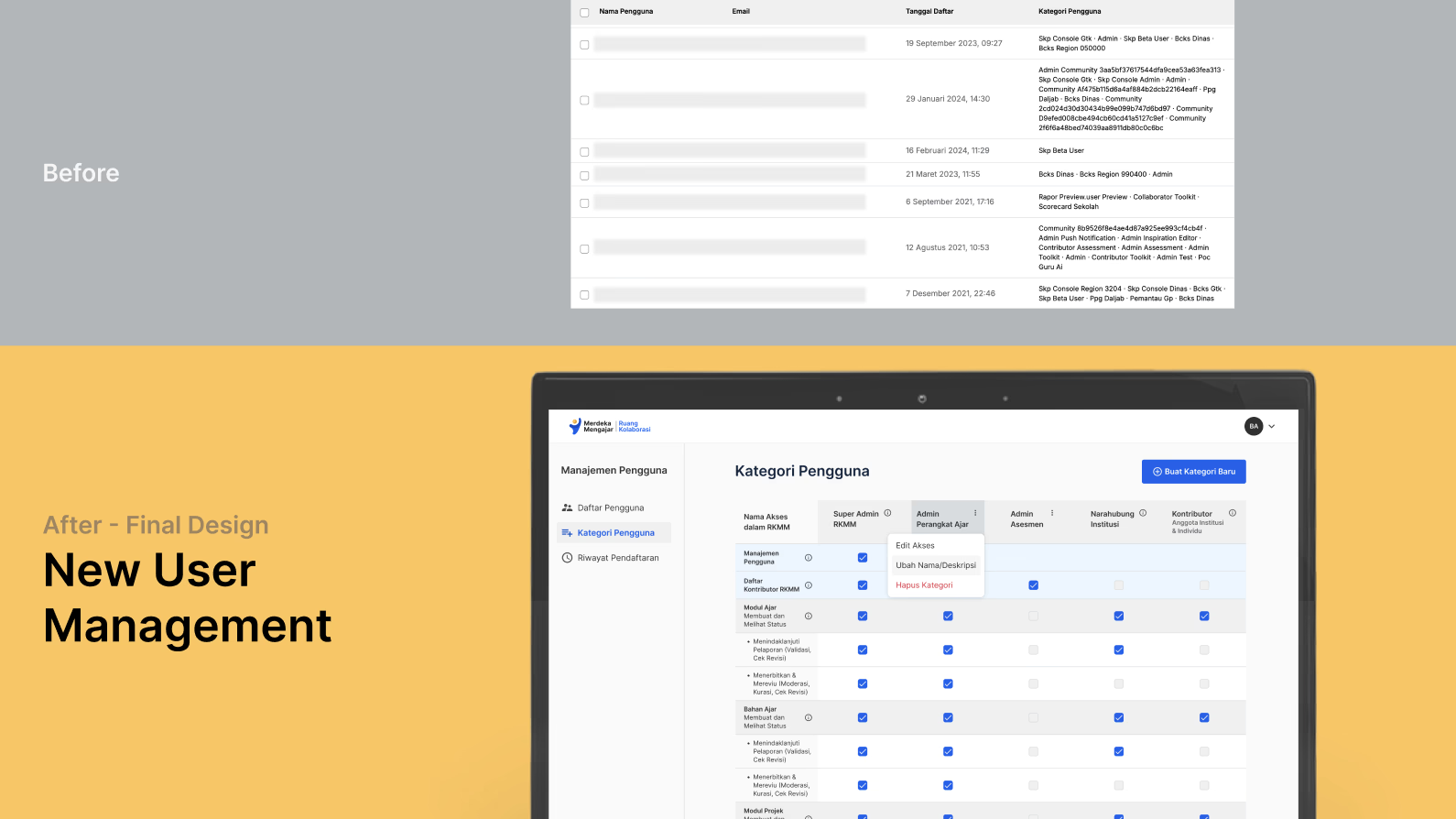
Following a parent-child-grandchild order, I designed the flow of assigning and adding capabilities in the user management menu for each contribution type. My structured framework had helped the team to spot limitations of each role.
4. Advocating a culture of feedback across functions within the team
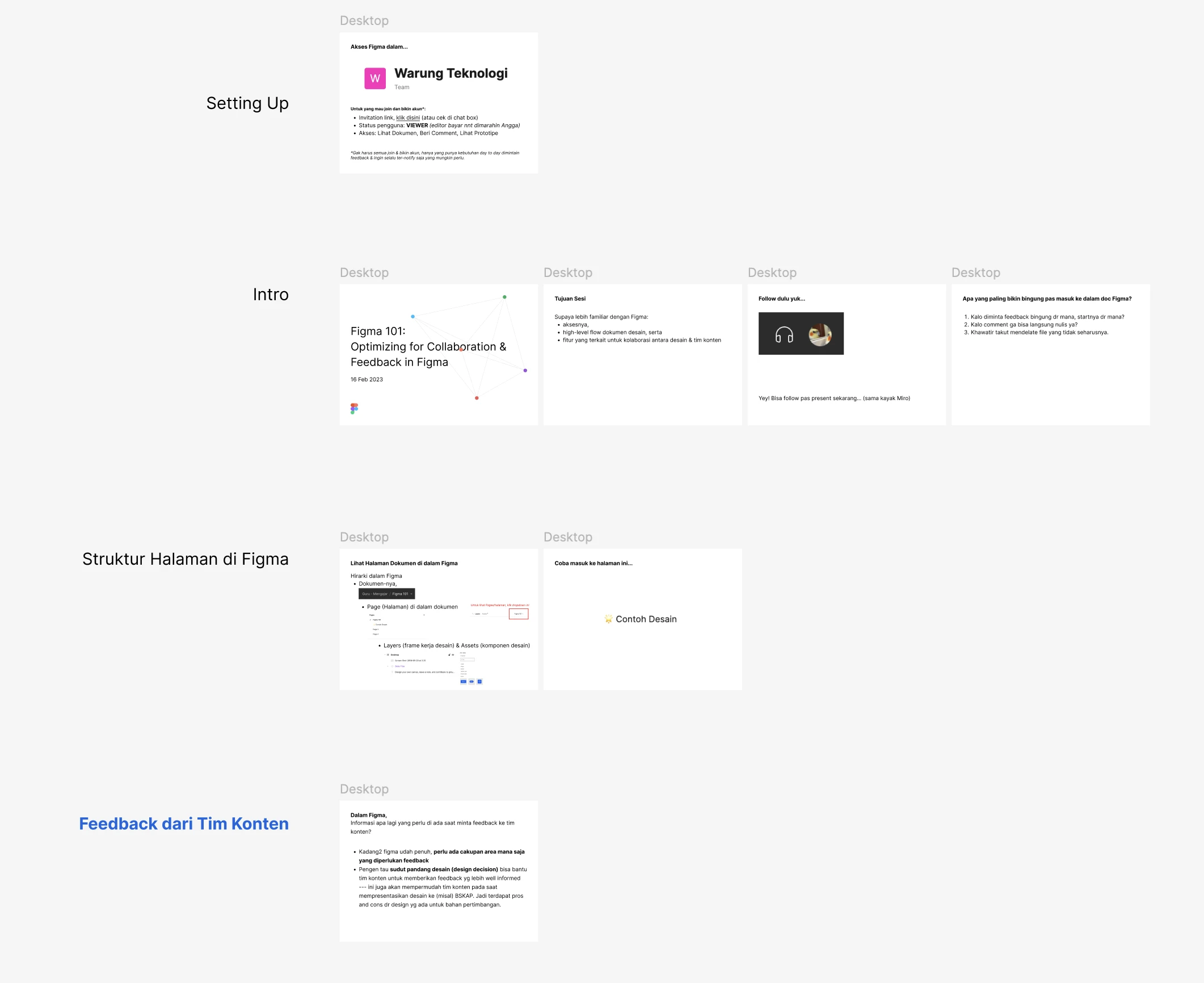
Starting with an asynchronous feedback session, I provided a space in Figma so the cross-functional team could put their thoughts on my design alternatives. Acknowledging their limitations, I kicked off the feedback system with a 101 walkthrough session to help them navigate Figma.
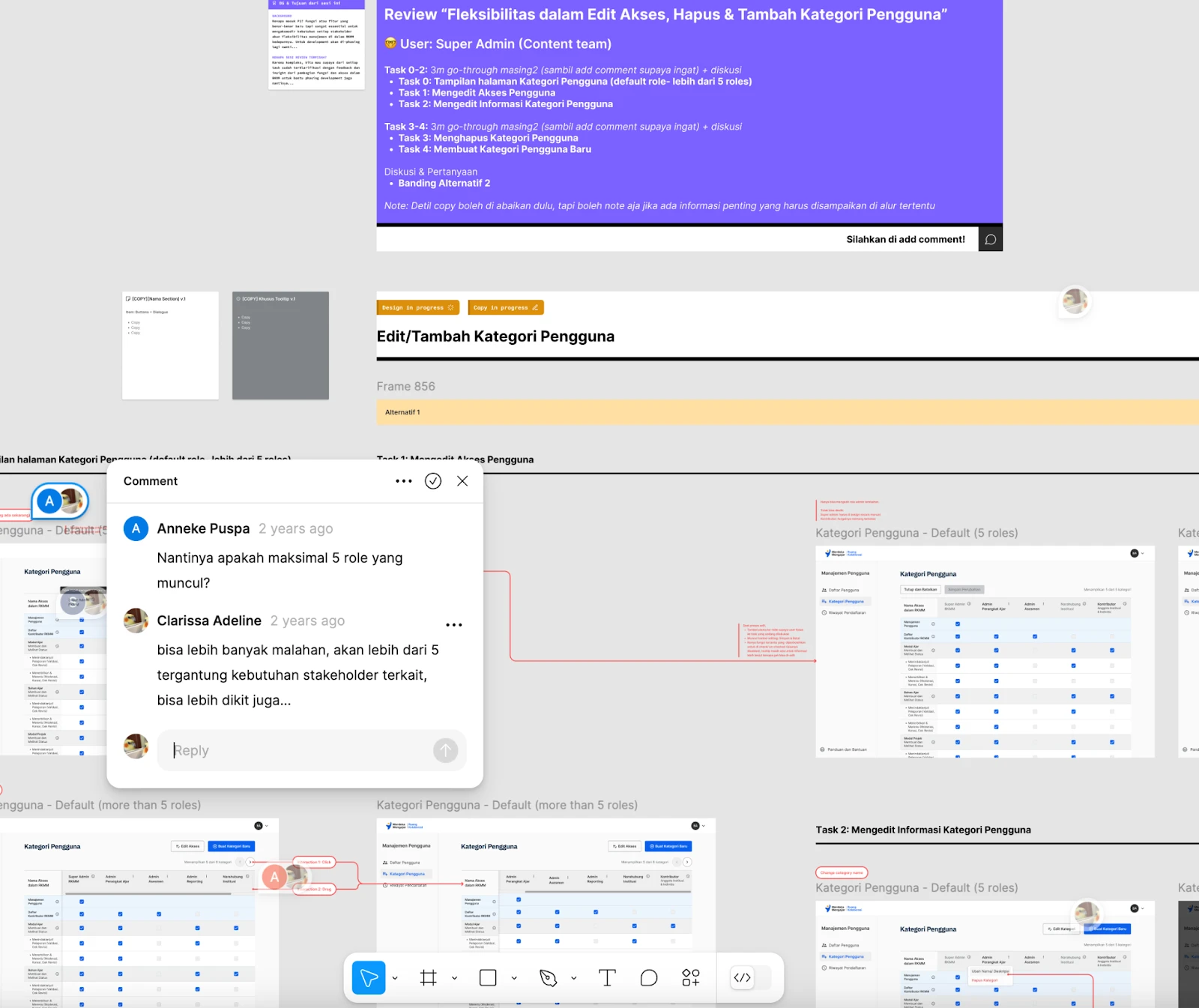
Over time, I realized that synchronous meetings foster more meaningful discussions. To address this, I initiated a weekly Design x Content session where our design team could share updates, progress, and design decisions, creating an open space for collaborative discussion and problem-solving.
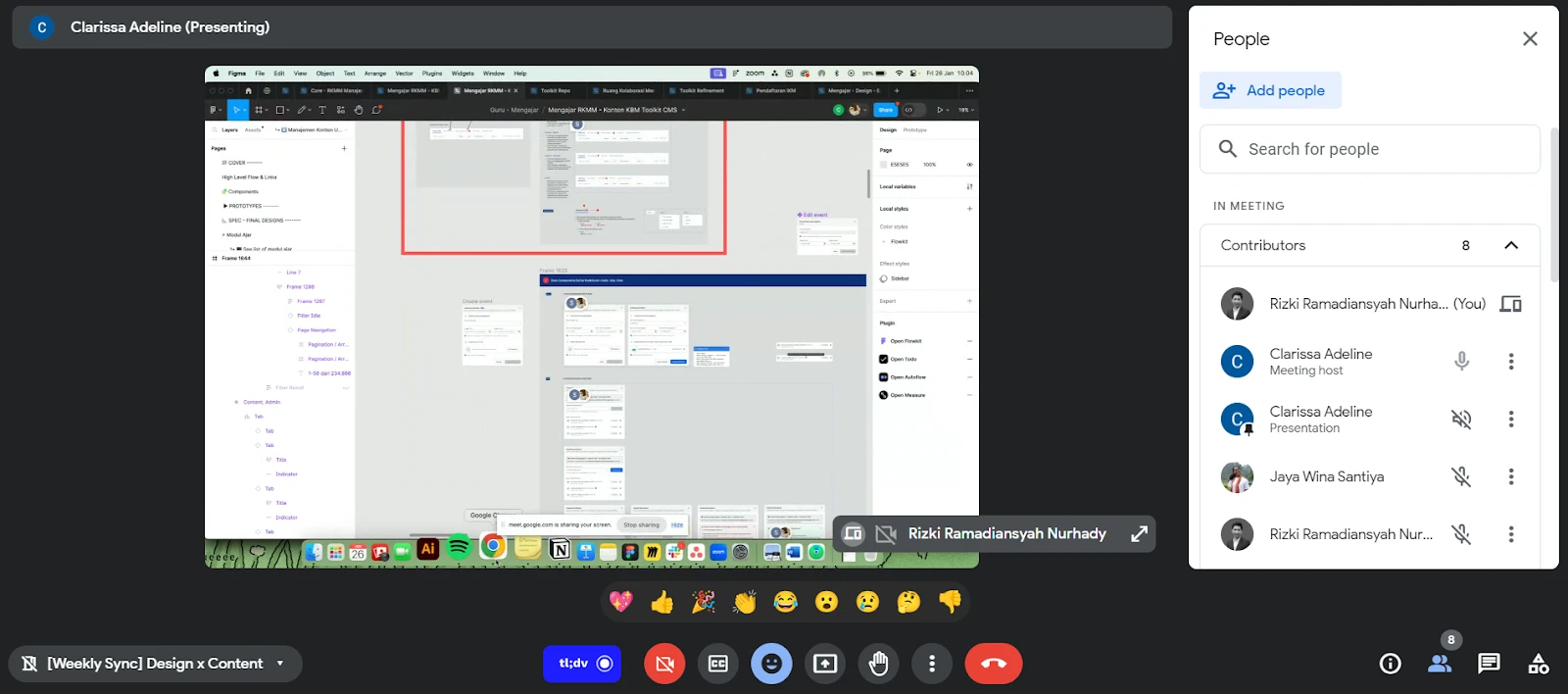
I learned that being versatile in how we communicate fosters trust and strengthens relationships with teammates, ultimately leading to higher-quality work! This became our weekly culture up until now! And the attendees varies among content team, engineers, data, even operations.
🎉 The Result
1. Contributors data and performance streamlined and supervised efficiently
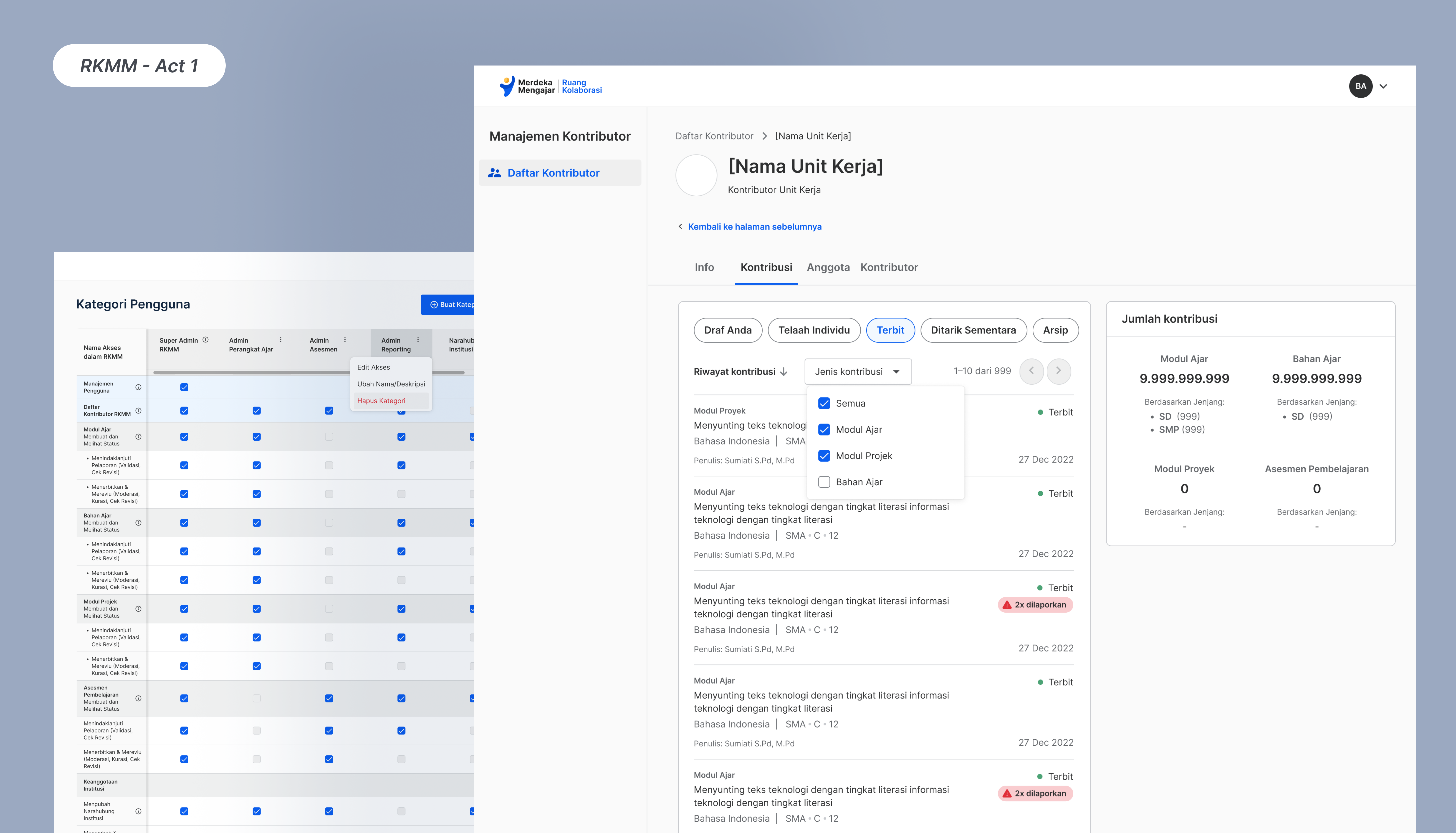
Internal admins can now track contributor statuses and monitor content progression through the Daftar Kontributor (Contributor's List). This feature allows admins to easily identify contributors who may need intervention or archiving based on their content performance.
In another hand, the contributor dashboard provides internal admins and ministry stakeholders with performance evaluation and level segmentations for upskilling initiatives.
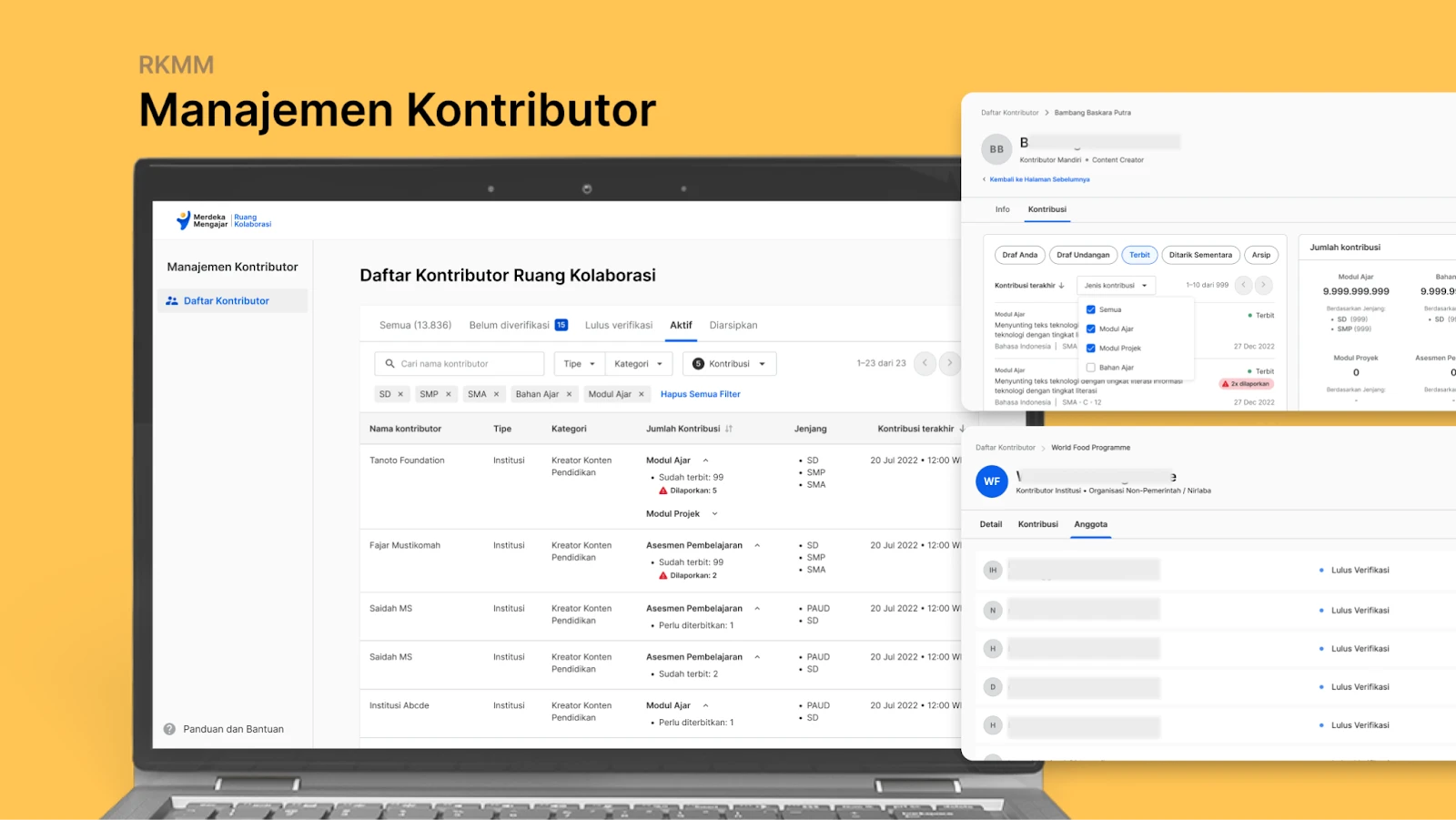
2. Streamlined guidance for contributors to level up their contribution, essentially safeguarding content guideline set by curriculum experts
Along the way, I iterated on features and optimized the content submission flow to align with best practices in teaching modules and updated curriculum guidelines established by Puskurjar. These enhancements were aimed at improving the overall quality and consistency of educational content.
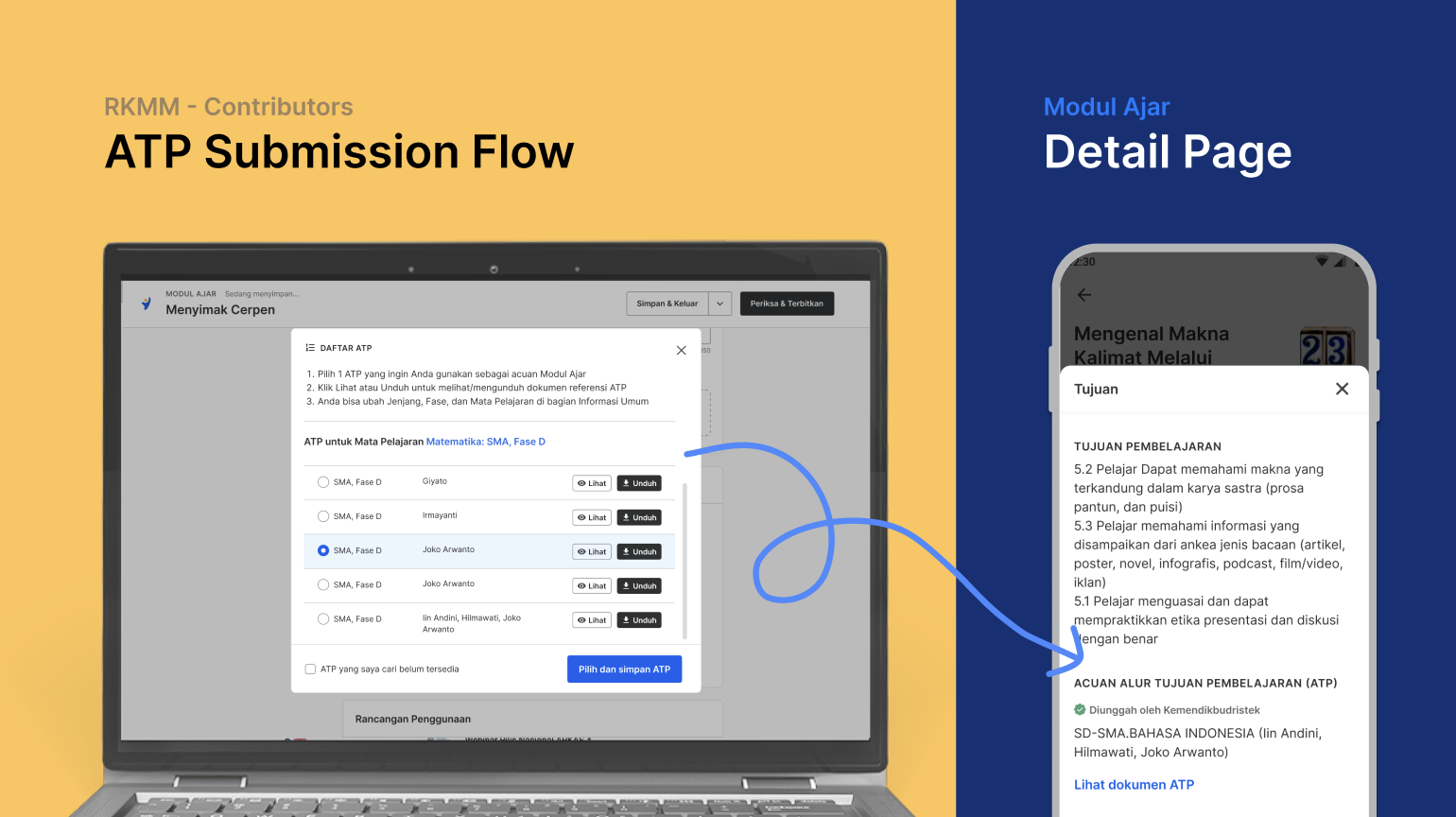
Objective:
Teachers can access a learning objectives reference, known as ATP (Alur Tujuan Pembelajaran), which provides a structured sequence or framework of learning goals to guide the educational process. While the new design flow would allow contributors to upload or select available ATP in the contribution form..
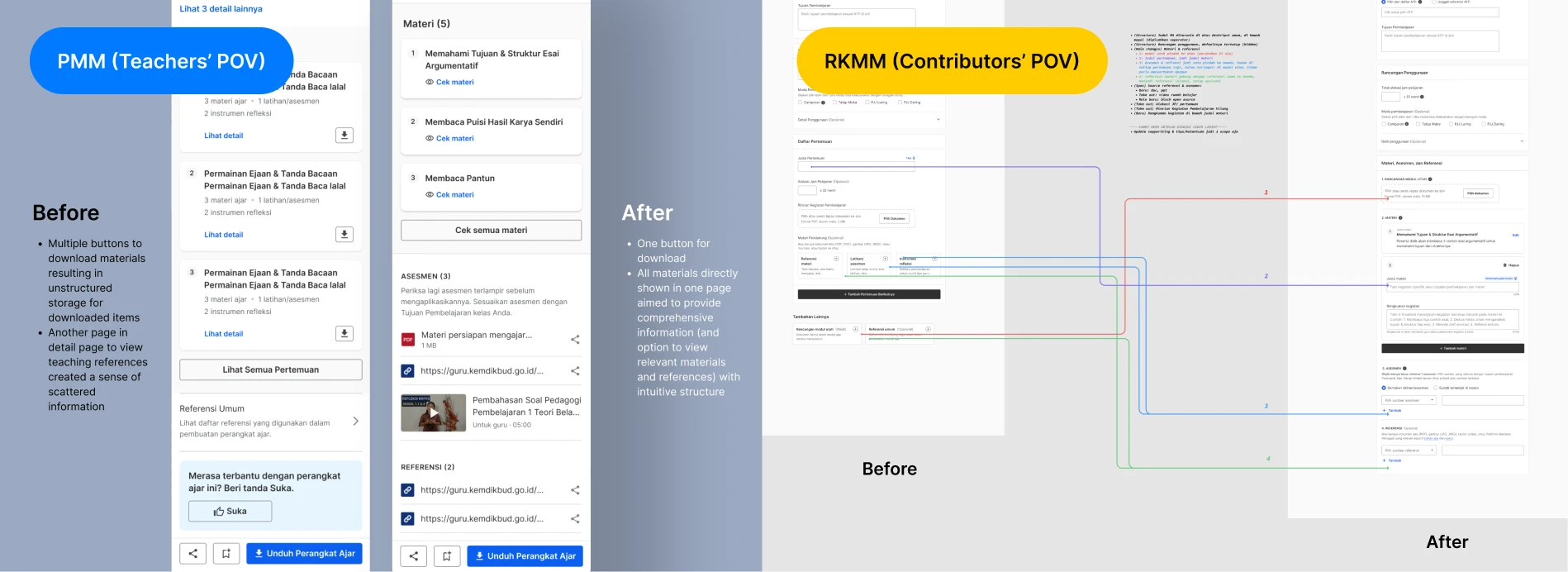
Objective:
For teachers, the minimal components simplify the modification stage of the MA reference to suit the needs of the learning process. It also minimizes contributors' workload when filling out the contribution form.
The end result was a more scalable and reliable content ecosystem, driving better learning outcomes for users.
🧭 Reflection
While it was new for me to work on a larger system with more complex functions, I discovered that it wasn't as daunting as I had anticipated. Some plan and direction did unexpectedly changed, but I came to understand that:
1. Ideal might not be good enough and impactful
During several discovery sessions, the team recognized that implementing user management functions in RKMM (including the parent-child-grandchild feature mentioned above) alongside developing contribution management features would place a significant burden on the engineering team's capacity. Ultimately, after re-scoping and aligning objectives, the user management feature was deprioritized to make room for more impactful features. Recognizing the team's limitations is essential for producing high-quality output while still envisioning the ideal state as our guiding north star.
2. Over-communicate, accommodate and relate
Every function and people in the team has their own expertise and knowledge of the product. Therefore, having to understand their perspectives and further switch them into sets of feedback would sharpen my design process. The way I fostered a scheduled space for discussions manifested team involvement and shared ownerships towards the product.
🧑🤝🧑 Feedbacks from the team…
Clar inisiatif nya besar banget, pembelajar yang cepat banget tentang konteks-konteks kurikulum merdeka serta serba-serbi arahan kurikulum. Selalu over-communicating in a good way misal saat minta feedback pembuatan deck utk presentasi desain pencacahan modul dan perbaikan fungsi manajemen MKI. Good job banget.
— Aldilla, Content Specialist
Cla bisa melibatkan researcher, tim konten, penulis, product, data untuk memberikan umpan balik yang diperlukan. Ditambah, sesi mingguan dan discovery planning ini berhasil sekali membuat proses kerja tim konten, desain dan produk semakin lancar. Komunikasi dan proses pemecahan masalah terjalin dengan mulus. Dampaknya, sebagai sebuah Squad kami merasa bisa bekerja dengan harmoni untuk mencapai tujuan yang sama.
— Jaya Wina, Researcher
Tim mampu tetap berjalan dengan lancar meskipun ada perubahan, tanpa mengalami banyak hambatan. Hal ini menunjukkan bahwa dia memiliki kemampuan luar biasa dalam mengelola tim design dan menjaga agar tetap efektif meskipun ada perubahan.
— Tasha Stamboel, Design Manager
💝 Credits
I would like to give my appreciation to the team involved in this project.. Them who shared their big thoughts and feelings of the product needs, struggles and willingly gifted me with a lot of meaningful feedback…
Tasha (design manager) for the endless encouragement and advocacy of effective ways of communication.
Wina (researcher) & Izzati (writer), my go-go girls whose collaborative spirit never bore but strengthened the impact of our design outputs.
Cath (product manager) who continuously reminded us of the strategic vision and relentlessly advocated for a lean, impactful process.
Part of the CMS Series