
CMS Series: Act.2 | "A Recalibration, Not a Crisis"
Automating content management functions to improve efficiency both internally and externally.
Role
Design Manager
Timeline
H2 2023 - H1 2024
Scope
Content Management System
Highlighted Skills
Strategic thinking, Stakeholder management
"Intermission done. Resume to Act 2…"
🔍 The Backdrop
Fast forward to mid-2023, I had the opportunity to elevate my career into a managerial role. During this transition, I took on greater ownership and responsibility in driving the entire discovery process.
Once again, improving Ruang Kolaborasi Merdeka Belajar (RKMM) became a priority project, particularly as the business process evolved to include more ministry stakeholders, such as the curriculum body and directorates at various levels of education. The evolving business process was aimed to minimize dependency towards internal content teams so they can be given more authority to manage and publish teaching resources.
🚩 What are the main challenges?
1. Lacking automation features resulting in inefficiency in meeting content demand
There remains a back-and-forth process between the RKMM system and the use of spreadsheets and Google form as a single source of truth (SSOT). Stakeholders are investing significant effort, resulting in low ownership and an over-reliance on the internal content team to achieve desired outcomes. This dependence creates challenges for effectively transitioning ownership.
2. Some roles in the RKMM system are outdated, causing unclear content supply technicalities among ministry work units
The main challenge revolves around managing content contributions between work units and partnerships. Work units now have two content sourcing options:
- An individual sourcing model where contributors are directly recruited by stakeholders. This model was already conducted and offers flexibility to meet their own internal pace and heard demands, and
- The newly socialized Mitra/Partnership model, which depends heavily on the external partners' interest and willingness to engage and upload content to PMM. However, a key issue remains: partners were not allowed to operate independently within the RKMM system, adding complexity to content management.
3. The change of key team player (Product Manager) that impact team's work dynamic
While I was given more responsibilities, there was a turnover in the product manager role, leading to significant changes in our team's workflow. Given this new dynamic, I am exploring how I can be a team player who provides ample context to ensure our ways of working remain effective.
I have to be empathetic towards his situation as I experienced something similar in early 2023.
🪩 What's potentially fun?
With my new role, I have the opportunity to explore my own management style.
Additionally, there were many unknowns, which implies a need for research during the product discovery phase. This will involve close planning and collaboration with researchers.
🧠 My Approach
1. Revisit and remap the entire business processes for clarity and to ensure alignment across all levels
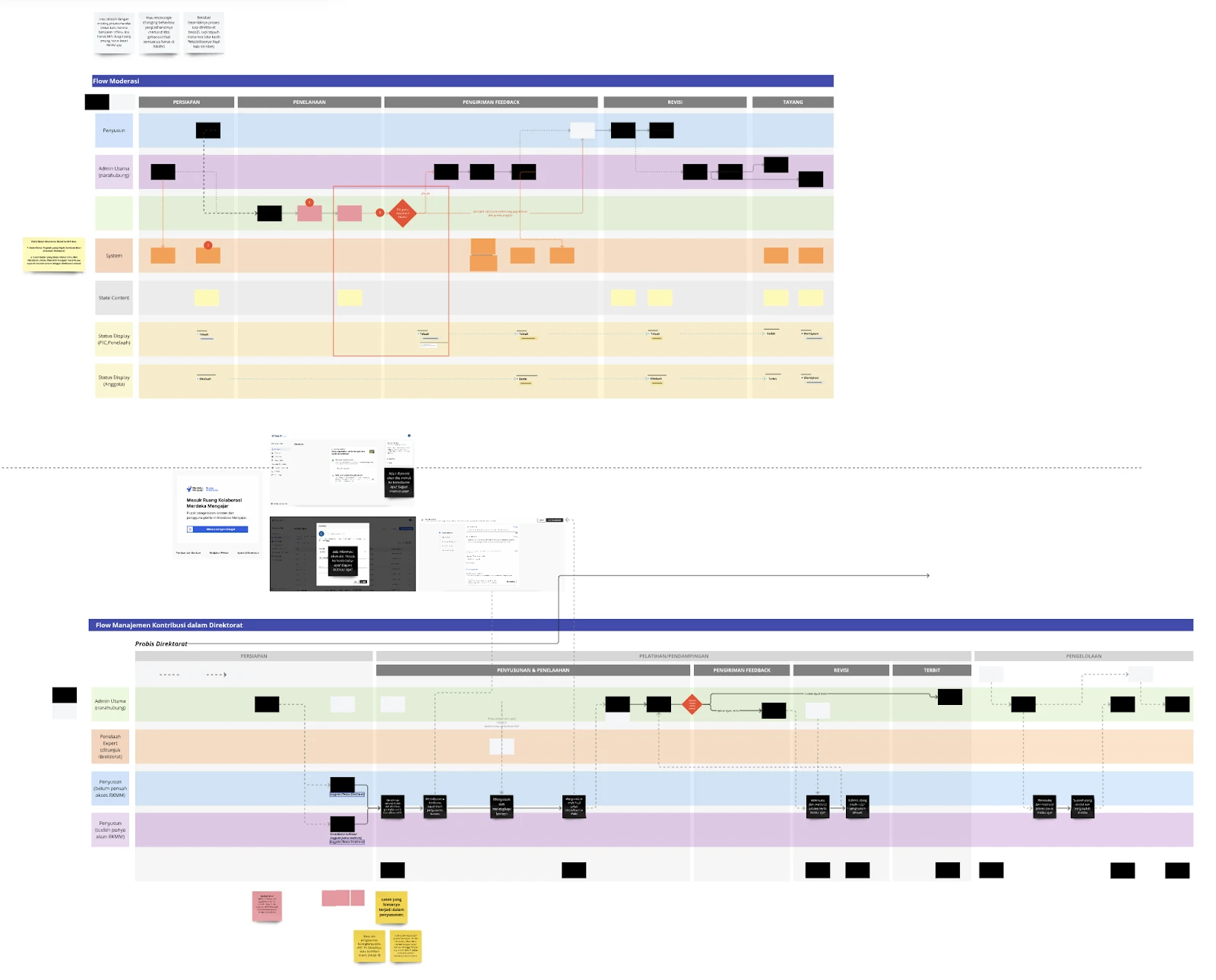
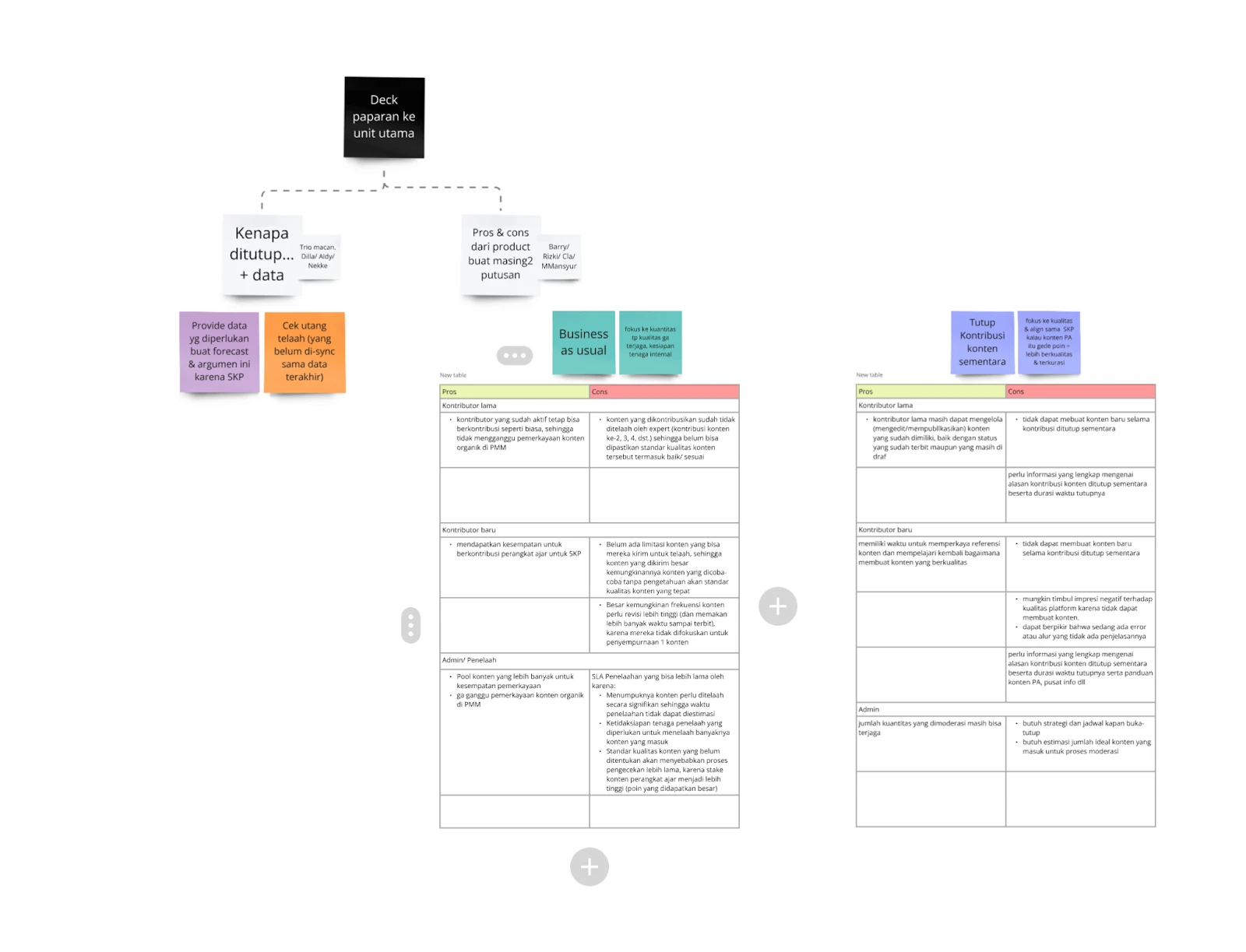
With a new role added into our radar (content reviewer, mitra and invitation-only contributors), I decided to conduct a journey mapping session with researcher to untangle every business process artifact we acquired into a user-centric journey map. After mapping out user needs at every touchpoint, we were able to identify the missing links necessary to enhance system automation and address information gaps for users.
2. Continuously involve and engage key ministry stakeholders as the driving force to motivate and mobilize others
To gain stakeholders buy-in, it's essential to present clear benefits and align project goals with their strategic objectives.
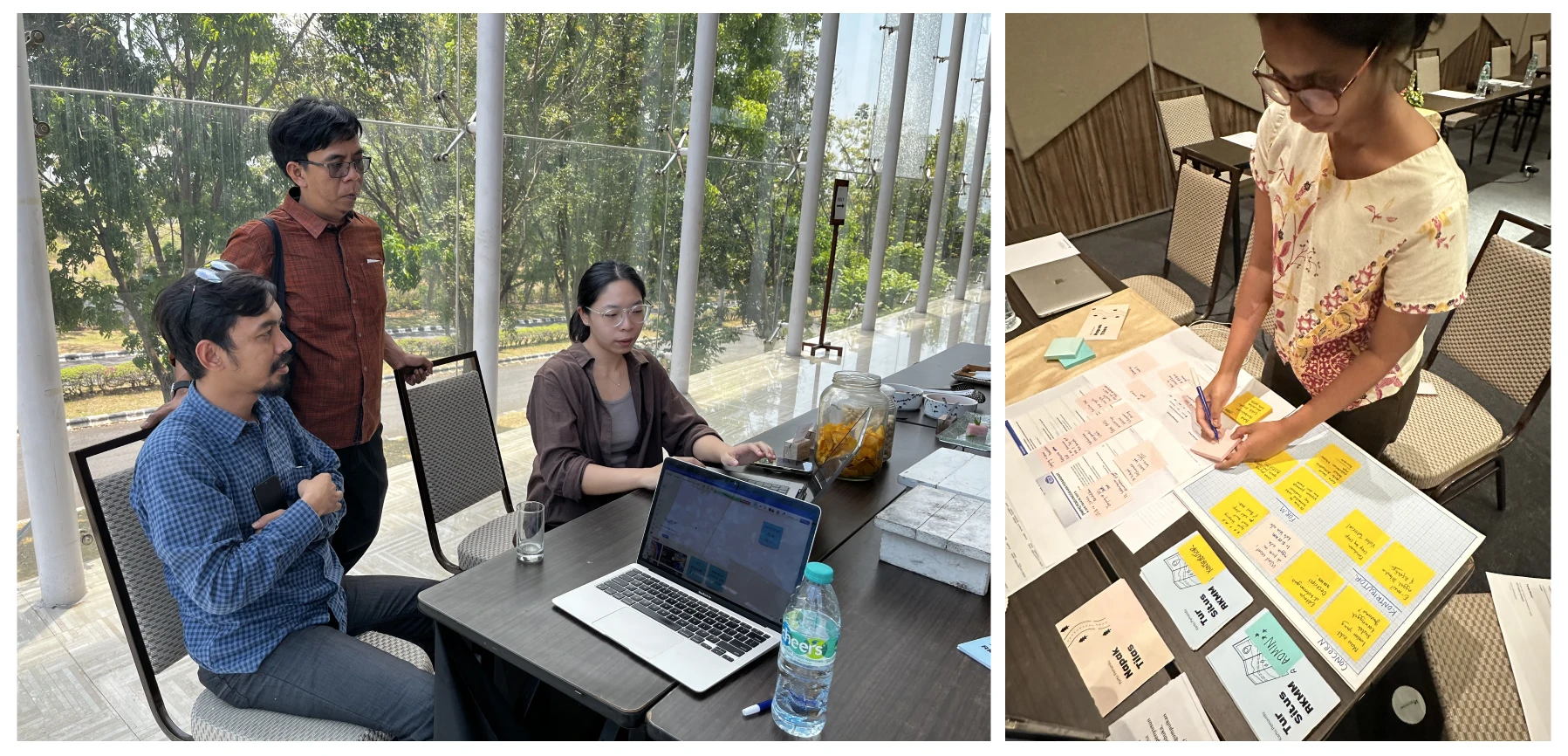
It is very exciting for me because the research context (content procedural) was new for myself
Therefore, we formulated the presentation deck along with product decisions early to Puskurjar (curriculum body - key stakeholder that oversees content substance and quality). This action fostered a strong sense of ownership and encouraged their active participation in both decision-making and system development.
3. Became a thinking partner for each of the team member
I began to facilitate 1-on-1 weekly sync with key team members across-function while keeping the discussion goals in mind.
- With the content manager & content specialist: We kept on discussing how the business process was strategized and how's the ideal state they had in mind. The takeaways of these discussions would help me prioritize any design decision needed for the product.
- With product manager: In our discussions, we always discussed the product vision within the ecosystem (RKMM > PMM and other available CMS within the ecosystem). We puzzled over all the initiatives, how each would impact others and the roadmap.
- With engineering manager: In addition to roadmap and grooming discussions, a lot of times we also brainstorm on effort and product requirements. I always provided several implementation alternatives and honed the ideas to meet delivery expectations.
- With researcher: With numerous research initiatives required for product development, our discussions constantly revolve around clarifying ideas to formulate sharp research questions that align with and meet the research objectives.
- With writer: we did a lot of brainstorming on design decisions, from conception into copy finalization to be tested and discussed with ministry stakeholders.
They were even willing to facilitate our usability tests and assist in sending invitations to respondents, including partners and work units.
🎉 The Result
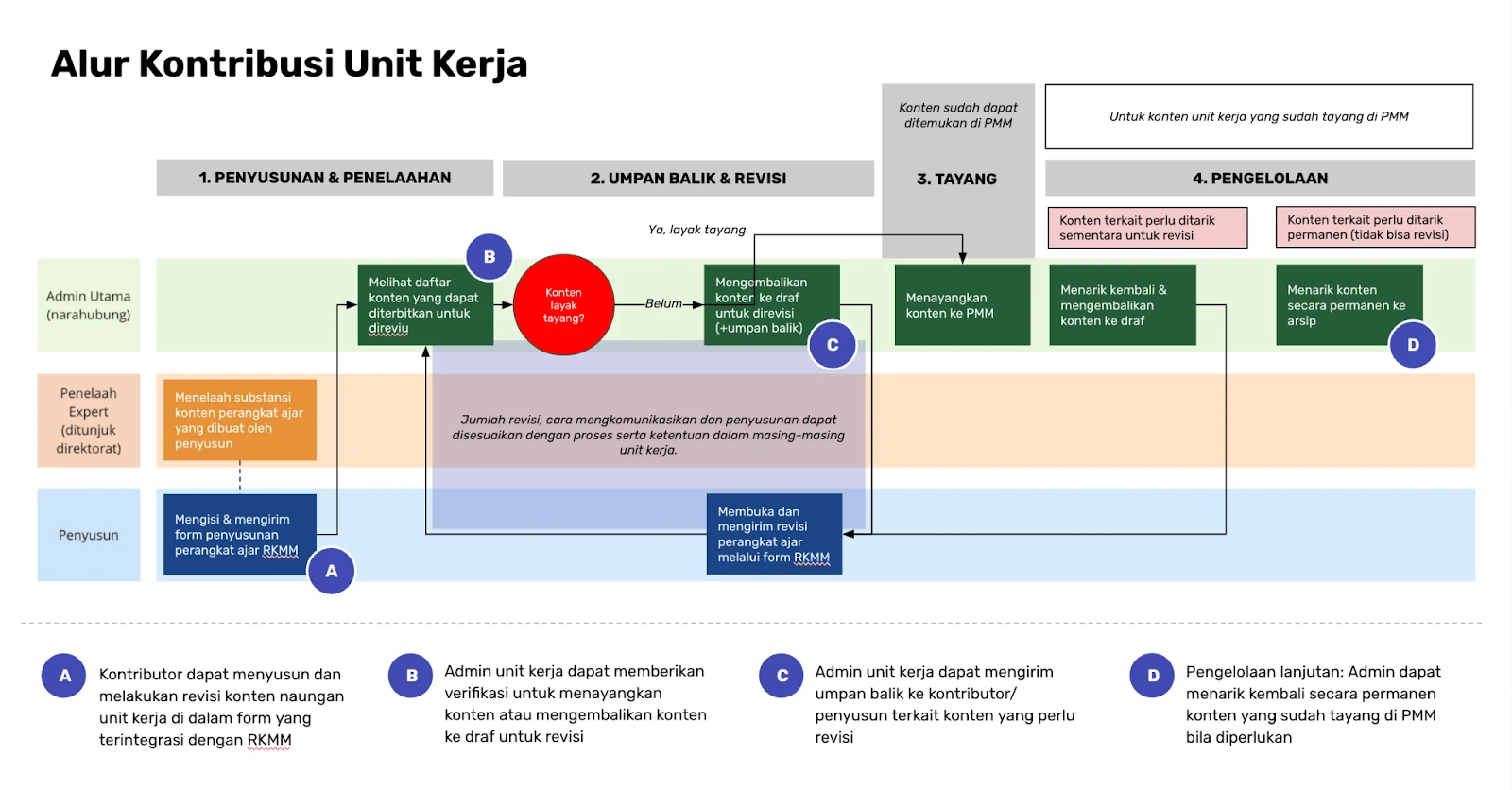
1. Streamlined content review process with better clarity for tracking status updates
If before manual human works was needed from labeling content statuses, inviting external content reviewers to Google sheet and sending the revisions, admins can now directly assign external reviewers through RKMM with automated status tracking for efficient content moderation.
Moreover, content statuses in RKMM are more advanced as it not only visualizes primary statuses for content movement (Draft, In review, Published, Archived, Temporarily Taken Down) but also secondary statuses for users to identify what action they need to take.
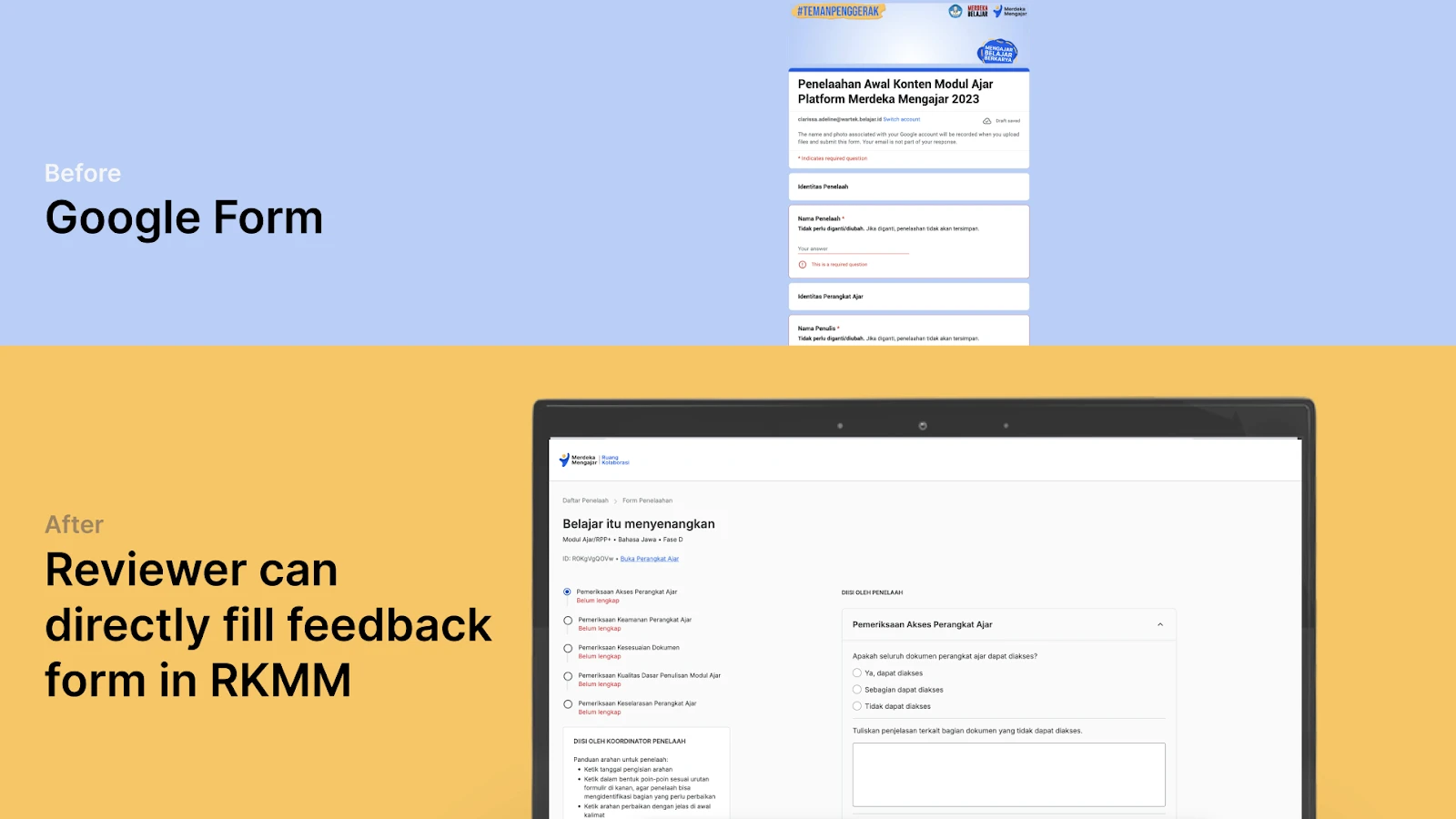
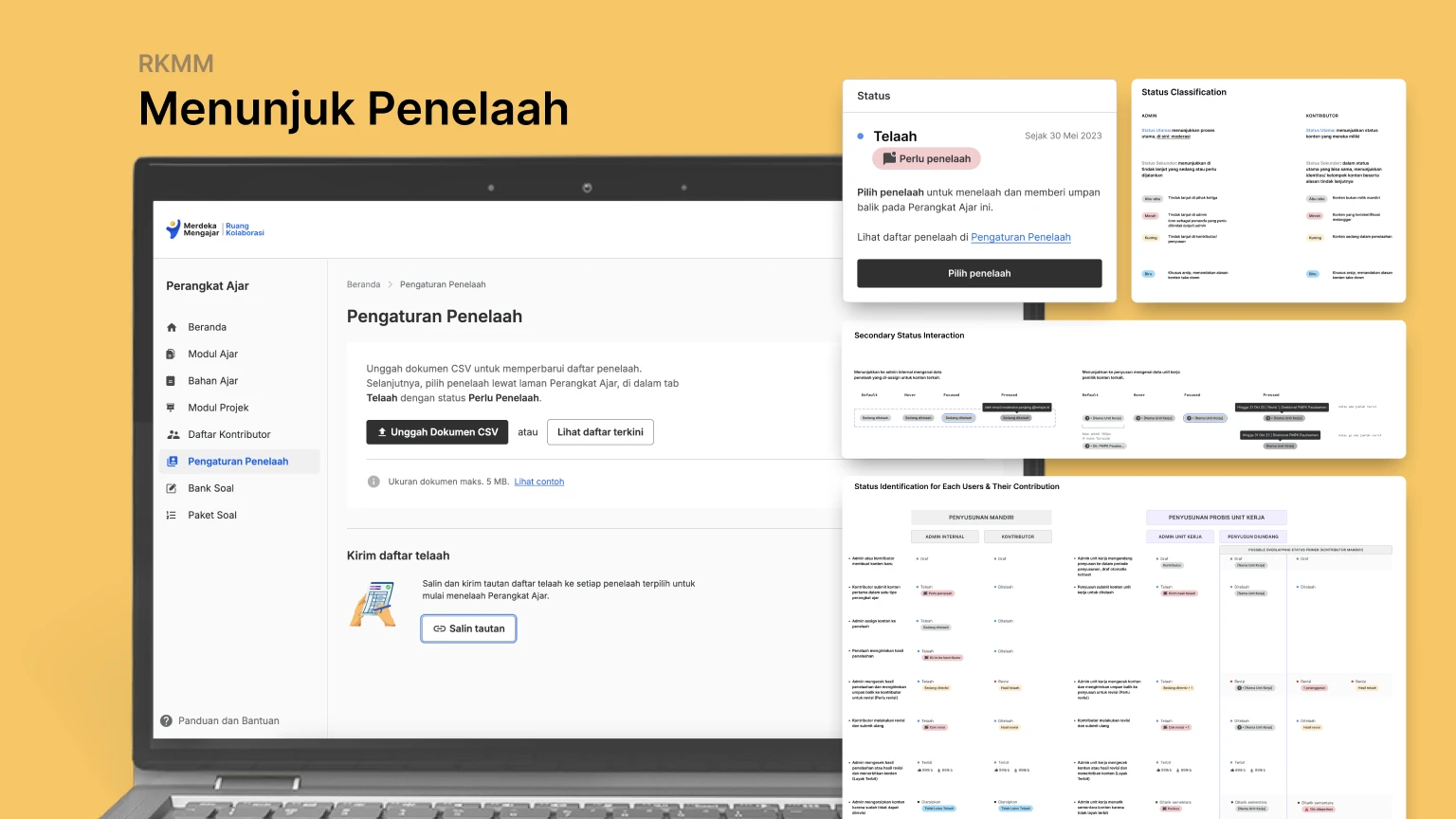
🖼 Image 2.5: Automation effort in RKMM for admins and content reviewers to ensure all qualified toolkit contents would be published efficiently.
2. Ministry stakeholders can now independently onboard contributors to upload content, boosting efficiency
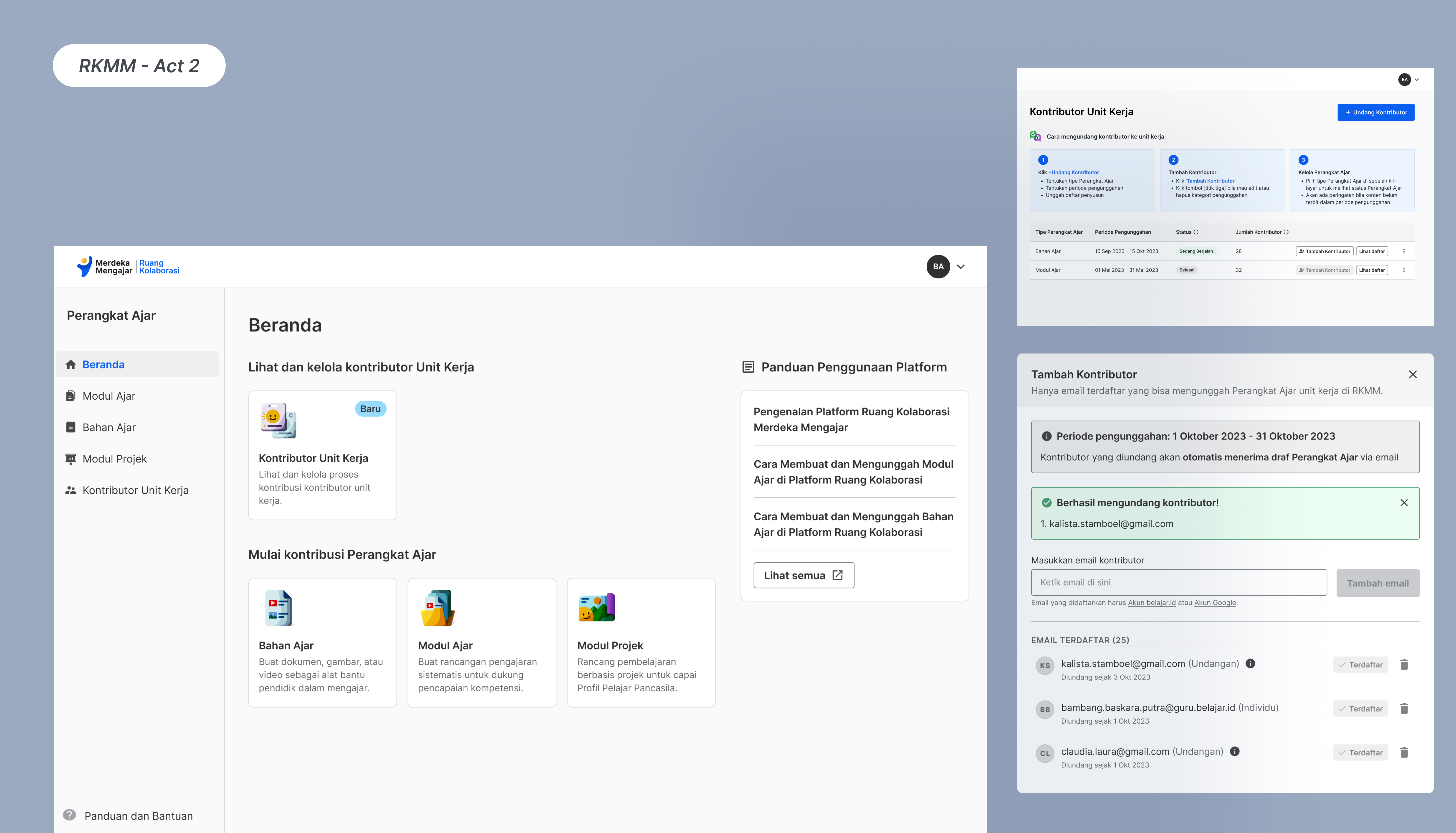
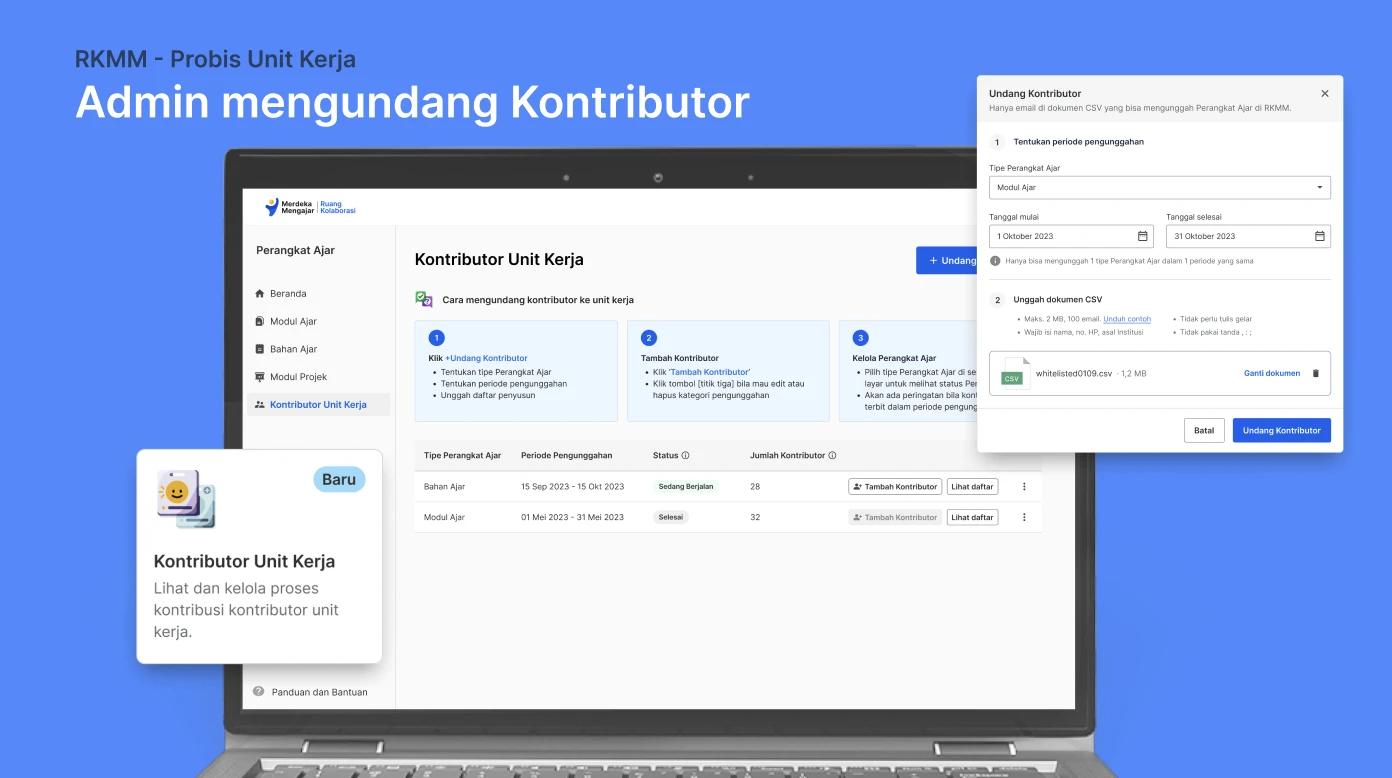
As ministry stakeholders need to be involved more on the responsibility of content ownership, we enabled an onboarding function for education ministry accounts (akun unit kerja) to invite collaborators (individual contributors) so they can moderate their contents on their own. This function minimizes dependency on content admins from our team with the objective of product irreversibility.
3. More automation of additional content types, beyond the toolkit, within the RKMM system
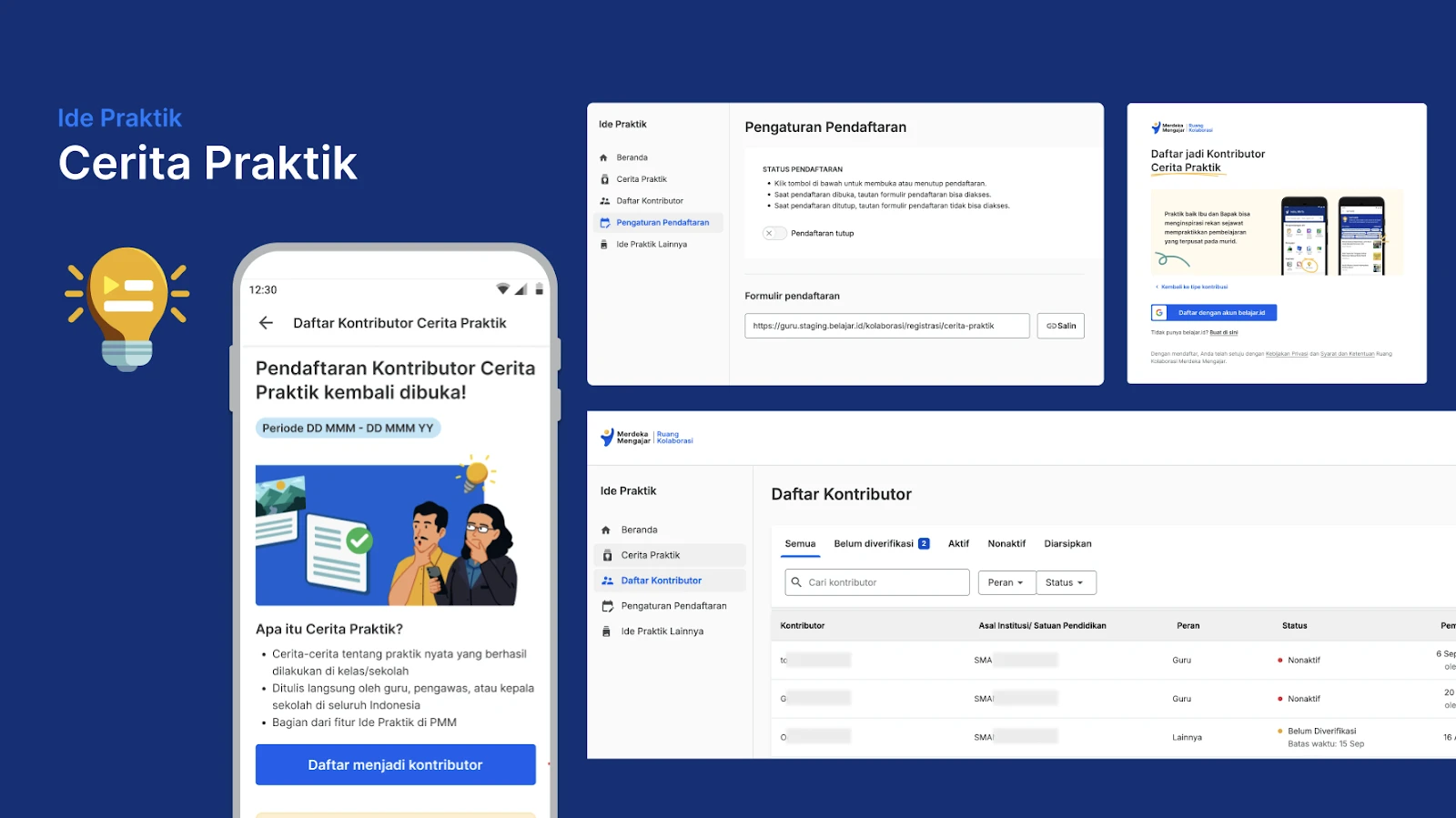
Another content genre I symphonized in this act is to include some functions for best practices content in PMM (Cerita Praktik). While the main challenges were the same (manual process and limited admin capability to moderate), Cerita Praktik has a different recruitment and content mechanism. The registration period was dissected into 2-3 phases each year, we called them "cohort" mechanism while toolkit registration opens all around the year.
To tackle these differences, we created an automated toggle mechanism to open registration by period. Operated by content admins, they can now select which content categories preferred for the ongoing recruitment needs. Moreover, to maintain consistency, we align all the statuses principles and visualization according to the last iterated statuses in toolkit/ Perangkat Ajar.
By doing this, we hoped RKMM would not only cater as a toolkit CMS product, but also enable all content types we had in PMM and even more content types to come in the future.
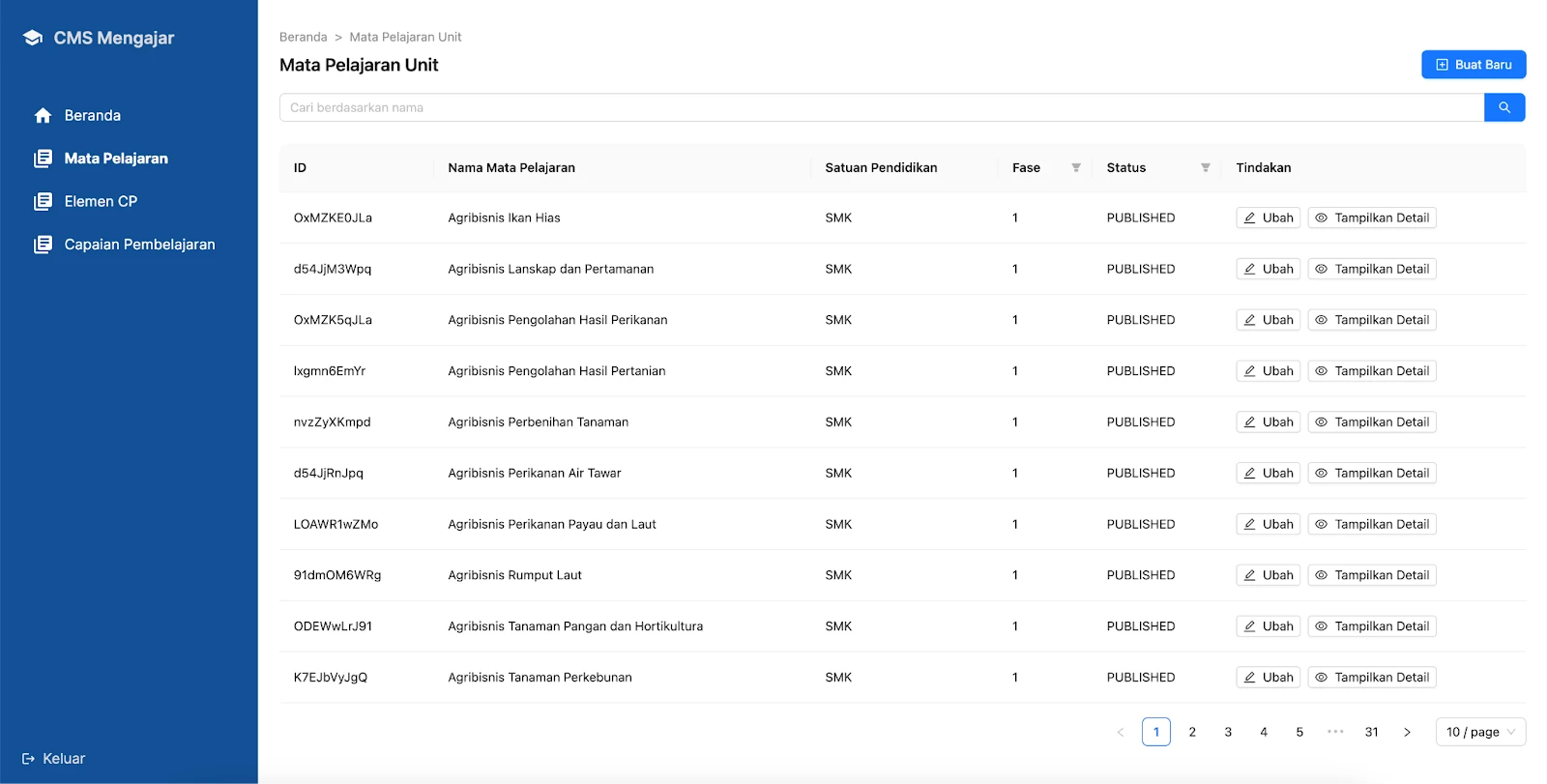
Another function we built to enhance content categories is by having a static interdependent CMS function specifically for them. In our curriculum, we have specific terms for teachers to refer to their teaching materials. Quickly narrating the terms, toolkits must be referred to these teaching components:
- Subjects (eg: Math, Socials, etc. according to educational units and phases)
- Alur Tujuan Pembelajaran (learning objectives flow)
- Capaian Pembelajaran (Learning outcomes)
The static CMS was built to cater the needs to link these components to each other with subjects as the main hook of everything. Why subjects?
Imagine a class of students, before teaching activity, firstly we need to make sure which subjects they will learn, then a teacher specialized in Math comes into the picture. Now, students and the teacher are there. Next, how should Math be taught in the classroom? Before class, Math teachers would then understand their class characteristics and design their teaching modules according to learning objectives and expected outcome.
This is why all teaching references and toolkits should refer to those components.
4. Team awareness that some of the content mechanism may not require product development to operate, at least for priority development
These challenges can still be addressed through standardized content operations and the technical socialization of the system to stakeholders and contributors.
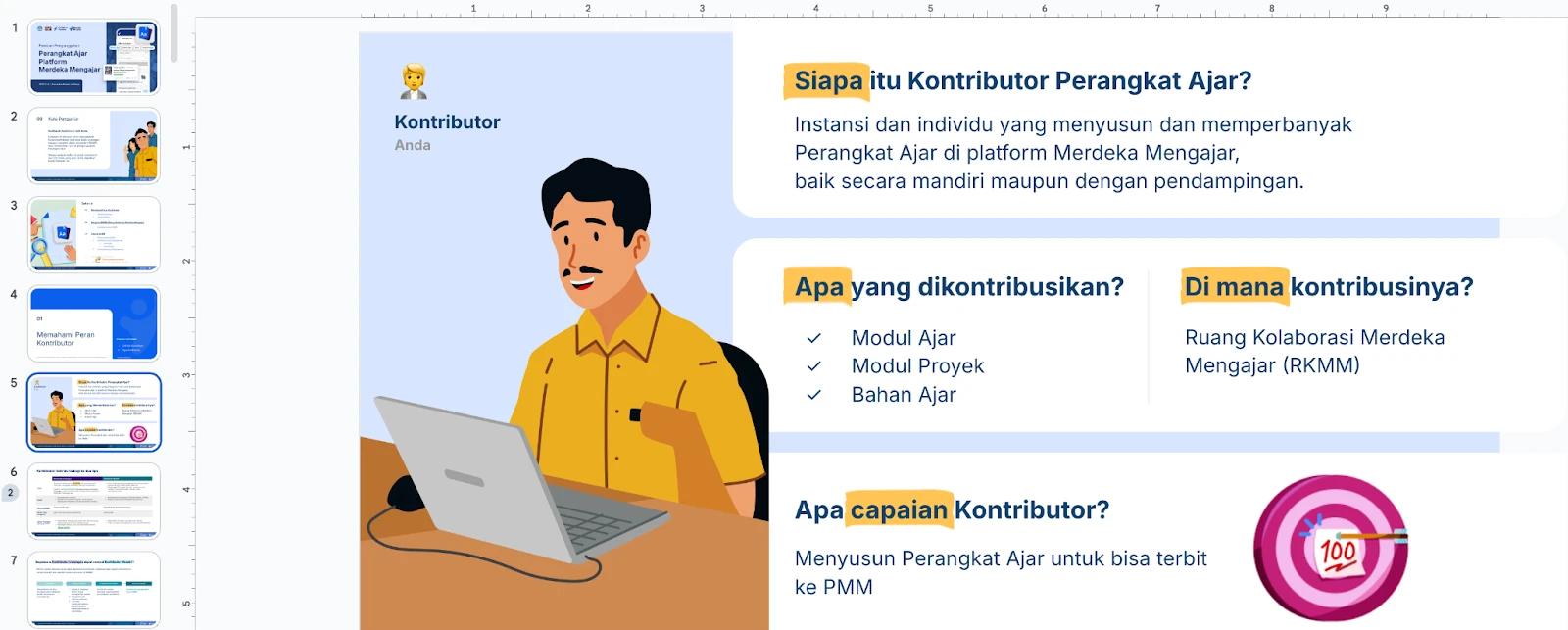
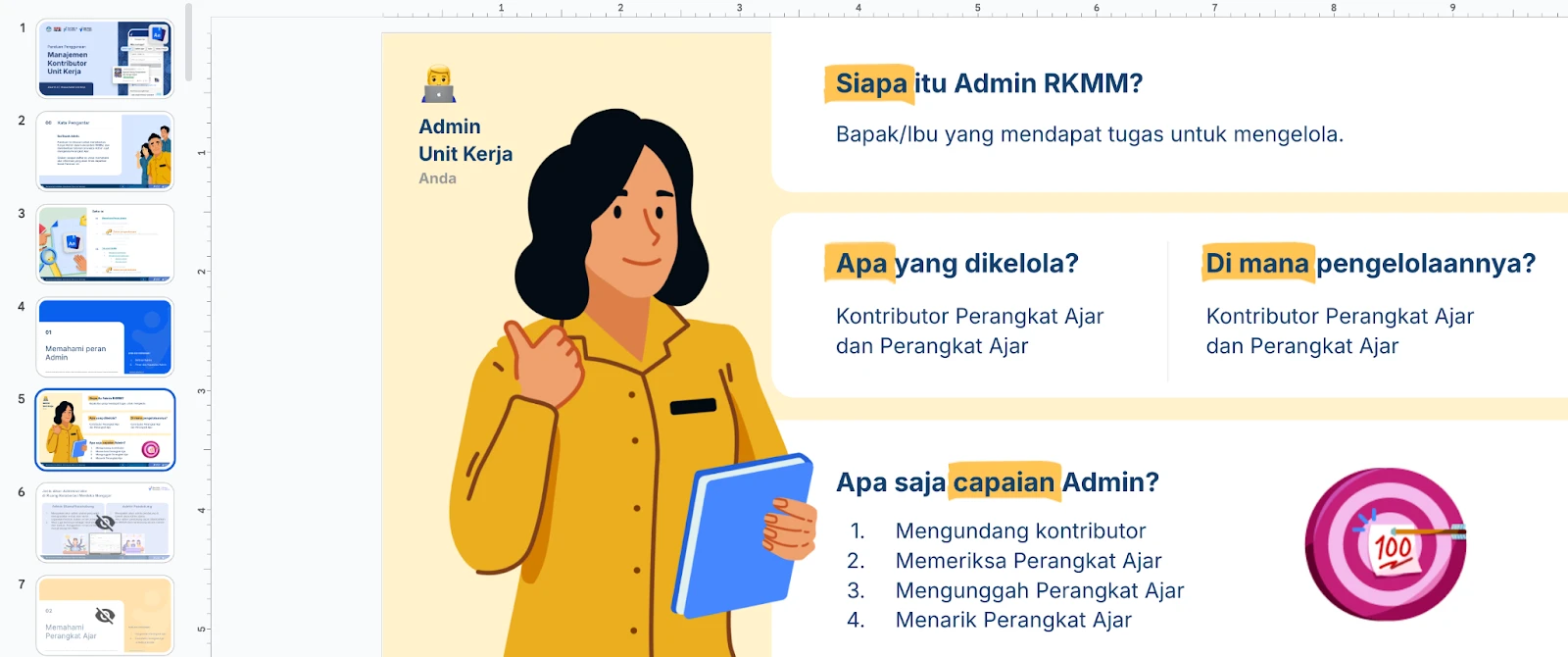
🖼 Image 2.9: Socialization effort from design team to ensure intuitive navigation for each user roles to understand
🧭 Reflection
1. Explore solutions with ecosystem thinking and holistic mindset
Treat all contributions in the platform as a big stream. Three important questions I always asked myself and the team when working among all of these contribution types are:
- What are the products' positioning and each key differentiator? (comms strategy, product hierarchy)
- How should users benefit form each contribution types? (more about rewards, upscaling, entitlement)
- How could we onboard users to the contribution process seamlessly and intuitively in Ruang Kolaborasi Merdeka Mengajar through Platform Merdeka Mengajar? (socialization efforts)
Answering these questions would maintain product consistency internally in development and also externally for users.
2. Most of the time when bandwidth is over in capacity, we need to scope down and find hacky ways while still transparent along the process
During capacity constraints, we often need to scope down and find creative, sometimes 'hacky' solutions while maintaining transparency throughout the process. It's crucial to provide options during discussions around effort, ensuring that any adjustments made still align with the overall objectives. This involves balancing the reduction in scope with the need to maintain the project's strategic direction, so we can deliver value without compromising the long-term goals.
3. Being versatile yet consistent is essential as a manager
With many contexts and responsibilities to juggle, I need to stay flexible in my approach while ensuring a steady, reliable direction for the team. Especially when working with a new Product Manager, the pace may seem slow at first. However, it's crucial to be a team player by continuously providing him with context and guidance. I must also be ready to step in and make product decisions when necessary, ensuring the workflow remains smooth and efficient during the transition.
4. It's OKAY if you need downtime for role switching
While being a design manager in the squad, I also demanded to fill the IC role as more hiring is not possible at that moment. Still learning on the management part with increased allocated time for coordination and facilitation, it was a real challenge to spend time crafting.
The mental capacity of switching roles would then result in context-lag, which would make work inefficient. To tackle this issue, I found that setting early expectations with the team about my need for focused time was helpful. Internally, I made it a habit to block time in my calendar consistently to ensure I could fully shift into deep work mode.
Just like sniffing coffee to switch between perfumes, this approach kept me grounded and gave me the focus needed for critical tasks without constant context-switching. Special tips: Even singing along with my bird pet (Kibo) in between focus time also helps!
🧑🤝🧑 Feedbacks from the team…
Clarissa selalu mengambil peran aktif dalam menyelaraskan progres pengembangan dan inisiatif antar tim, utamanya tim konten, eng, dan produk. Sebagai rekan diskusi, Clarissa merupakan rekan diskusi yang open, kolaboratif, dan strategis. Clarissa juga berprogres dalam berkoordinasi dan berkomunikasi dengan unit kerja dalam menggali konteks serta akhirnya dapat merencanakan dan memetakan kebutuhan discovery dari inisiatif pengembangan/iterasi produk, termasuk di dalamnya kebutuhan eksplorasi dari proses bisnis tim konten.
— Anneke, Content Contribution Manager
Di semester ini, Clarissa konsisten dengan keuletannya, tidak cuma sebagai desainer/kontributor individual tapi juga sebagai manajer. Clar tidak hanya sigap dan aktif menjadi thinking partner tapi juga sebagai kapten dalam tim.
— Izzati, Principal Writer
Clar proaktif dalam driving the strategy di project-project yang dijalani. Ia memiliki inisiatif yg bagus untuk memulai dan memastikan diskusi antar functions / squad berjalan dengan baik agar pemahaman atas problem ataupun identifikasi peluangnya bisa tercapai (contoh dalam inisiatif peluang kontributor). Clar juga dapat mengidentifikasi dengan baik peran produk di dalam rangkaian proses bisnis kontribusi konten, dimana sangat bermanfaat dalam mempertajam strategi besarnya.
— Tasha, Senior Design Manager
She consistently delivers designs that meet users' needs while aligning with our strategic goals. Moreover, she consistently collaborates with me as a Product Manager in one-on-one sessions, acting as a true thinking partner. Together, we work on making our products leaner and more efficient, with a strong focus on agile development. Her dedication to collaboration and her innovative mindset have greatly enhanced our product development process.
— Rizki, Product Manager
💝 Credits
In this act, I would encourage you to give a standing applause for some team members that truly played a part in supporting my growth as a manager as well as my work as the designer..
- Wina (researcher) for being a ranting partner on research objective and making sense all the direction we got
- Tasha (senior design manager), for always listens and facilitate my personal growth despite not working on the same initiatives anymore
- Angger (engineering manager) whose ideas and hacky ways always inspires me to prioritize and scale down impossible directions
Part of the CMS Series